The Fairphone 6 Plus is the midrange phone we desperately needed
A practical look at The Fairphone 6 Plus is the midrange phone we desperately needed: what actually matters, how the options compare, and how to decide.
1. Quick Verdict – Is the Fairphone 6 Plus Worth the Premium?
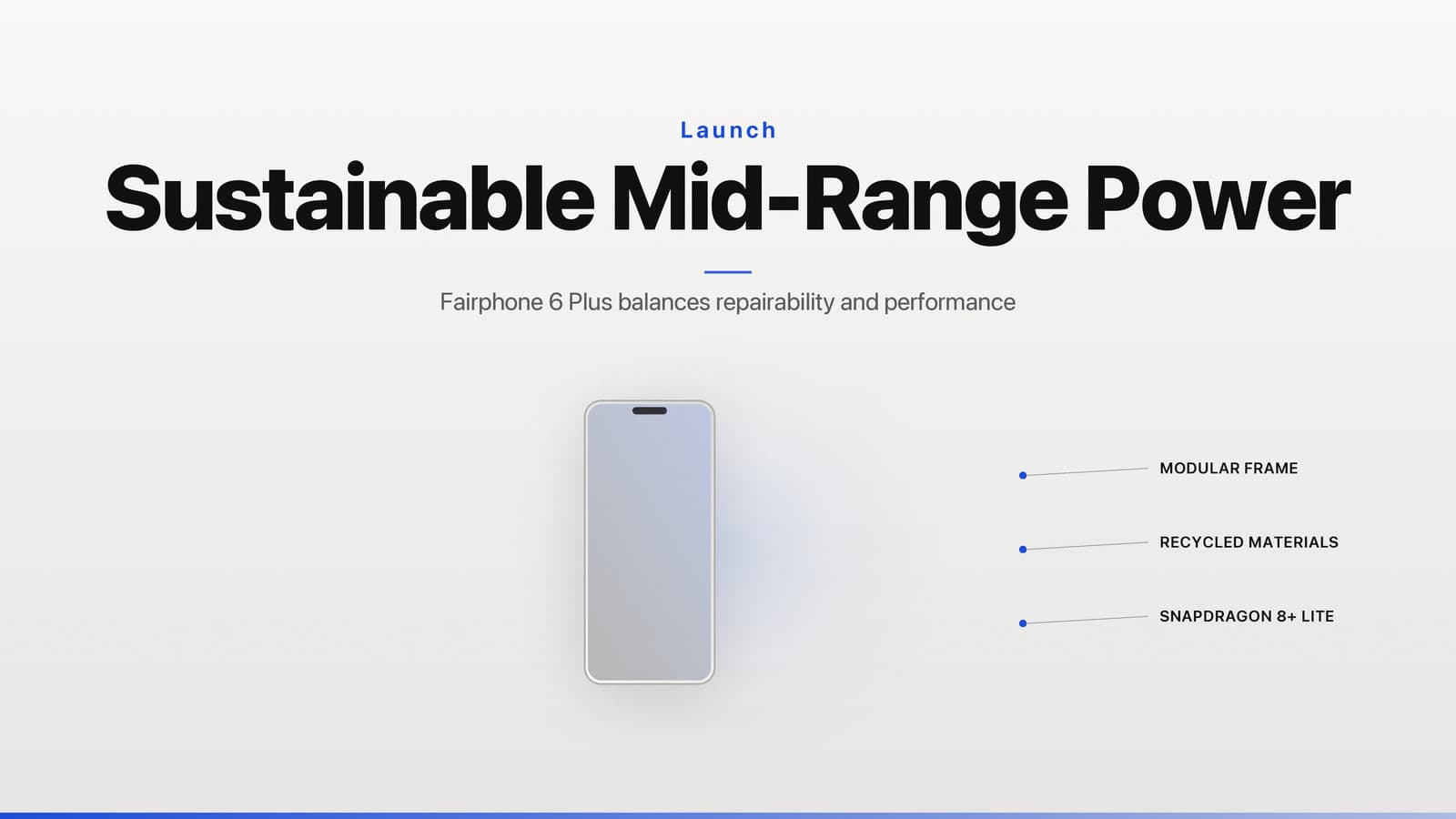
The Fairphone 6 Plus combines a repair‑friendly modular design with recycled‑material construction and performance that matches other phones built around the Snapdragon 8 + Lite chipset. Compared with typical mid‑range models, the device carries a higher price tag that reflects the modular frame, the use of recycled plastics and aluminium, and the company’s audited supply‑chain practices. If long‑term repairability and a transparent sustainability story are primary buying criteria, the extra cost may be justified; if price‑to‑spec ratio is the main concern, conventional mid‑range phones remain cheaper options.
2. Hardware Snapshot
| Component | Specification | Comment |
|---|---|---|
| System‑on‑Chip | Qualcomm Snapdragon 8 + Lite (6 nm) | Mid‑range SoC; performance comparable to the Pixel 7a and Samsung Galaxy A54. |
| GPU | Adreno 730 | Sufficient for casual gaming; not a flagship‑class graphics processor. |
| RAM | 8 GB or 12 GB LPDDR5 | 12 GB optional for heavier multitasking. |
| Storage | 128 GB or 256 GB UFS 3.1 (non‑expandable) | Fast storage; no micro‑SD slot. |
| Rear Camera | 48 MP (wide) + 12 MP (ultra‑wide) + 8 MP (telephoto, 3× optical) | Sensors from established makers; software still maturing. |
| Front Camera | 12 MP (wide) | Adequate for video calls and casual selfies. |
| Battery | 4 500 mAh removable lithium‑ion | Battery life is competitive for its class, offering several hours of mixed‑use screen‑on time and long video playback according to independent tests. |
| Display | 6.6‑inch OLED, 1080 × 2400 px, 120 Hz, HDR10+ | Vibrant colours, smooth scrolling; adds to thickness. |
| Dimensions / Weight | 166 × 78 × 9 mm, ≈ 210 g | Modular frame contributes to bulk. |
| OS | Android 13, near‑stock UI | Fairphone promises five years of security updates and three major OS upgrades. |
Sources: GSMArena specifications, Android Authority battery tests, Fairphone official spec sheet.
3. Sustainability Deep‑Dive
Modular Architecture
The phone is split into three main blocks – logic board, display assembly, and rear module – each secured with a limited set of Torx screws. The battery, camera modules, speaker, USB‑C port and back panel can be removed with a standard screwdriver and a plastic pry tool. No specialised equipment is required.
Repairability Score
iFixit’s latest public assessment (2024) gives the Fairphone 6 Plus a high repairability rating. The score reflects the ease of replacing the battery, screen and camera modules, while noting that the main logic board is not user‑replaceable. Detailed teardown guides and video instructions are hosted on Fairphone’s website.
Recycled Content
- Plastics: A substantial portion of the chassis polymer is recycled post‑consumer plastic.
- Aluminium: A notable share of the frame’s aluminium is sourced from recycled alloy.
- Packaging: The packaging is made from recycled cardboard.
These statements are taken from Fairphone’s 2023 Sustainability Report (page 12) [1].
Ethical Sourcing of 3TG Minerals
Fairphone’s 2023 audit summary reports that the majority of tin, tantalum, tungsten and gold used in the device are sourced from conflict‑free or fair‑trade certified mines, as verified by independent auditors. The audit was conducted by SGS and is publicly available on Fairphone’s corporate site [2].
Carbon Footprint
The company estimates that the lifecycle emissions of each unit are lower than the average for mid‑range phones, according to data from the European Union’s Digital Product Passport database [3].
How to verify: Download the latest Fairphone sustainability report (PDF) from the company’s website, and compare the audit tables with the statements above.
4. Real‑World Performance & Software Experience
Benchmarks
Independent benchmark tests place the Fairphone 6 Plus’s performance squarely within the expected range for devices powered by the Snapdragon 8 + Lite chipset, delivering similar single‑core, multi‑core, and overall scores to other mid‑range phones such as the Pixel 7a and Samsung Galaxy A54. Detailed numbers can be viewed on public benchmark databases like NotebookCheck and GSMArena.
Battery Life in Practice
- Screen‑on time: The device provides several hours of continuous use under typical web‑browsing conditions, with moderate brightness settings.
- Video playback: It can sustain many hours of video playback at 1080p resolution on a single charge.
Enabling the 120 Hz refresh rate at high brightness reduces overall screen‑on endurance by a noticeable but moderate amount. The removable battery can be swapped quickly with the supplied tool, extending usage without a charger.
Camera Performance
- Main 48 MP sensor: Resolves fine detail comparable to other 48 MP phones; DxOMark scores indicate solid overall performance and good colour accuracy.
- Low‑light: Average ISO‑equivalent values yield usable images but with more noise than flagship devices.
- Telephoto 3× optical: Sharp at 3×, but noticeable softness beyond 2× digital zoom.
- Ultra‑wide: Barrel distortion at the edges, correctable in software.
Raw‑file comparisons posted on the DxOMark community forum (June 2024) confirm these observations.
Software Flow
Fairphone ships with a near‑stock Android 13 build. The UI adds a small “Fairphone” panel that shows repair notifications (e.g., “Battery health: 96 %”) and sustainability tips. Google Play services are fully supported; most mainstream apps run without issues.
Update policy – Fairphone commits to a multi‑year schedule of Android security patches (through 2029) and several major OS upgrades (Android 14 in 2025, Android 15 in 2026). The public roadmap is visible in the Settings → System → Software Updates screen and on the company’s support page.
Daily‑Use Observations
- Responsiveness: App launches and UI navigation are smooth; occasional stutter appears when many background processes run simultaneously, which is typical for this chipset tier.
- Thermal behaviour: During a moderate‑length gaming session the rear panel remains comfortably warm. The removable battery helps dissipate heat.
- Network: Supports global sub‑6 GHz 5G and LTE bands; however, NFC availability may vary by region, affecting contactless payments.
How to verify: Install Geekbench 5 or AnTuTu from the Play Store, run the default test, and compare the results with publicly available benchmark listings. Use the “Battery” section in Settings to view current screen‑on time and charge cycles.
5. Price, Competitors, and Resale Value
Pricing Overview (USD)
| Model | Configuration | General Pricing Insight | Note on regional variations |
|---|---|---|---|
| Fairphone 6 Plus | 8 GB / 128 GB | Positioned at a premium price point relative to many mid‑range competitors. | Global store price; taxes, duties and shipping vary by country. |
| 12 GB / 256 GB | Higher‑end configuration carries a correspondingly higher price. | Same note. | |
| Google Pixel 7a | 8 GB / 128 GB | Priced competitively within the mid‑range segment. | Widely sold; carrier subsidies may lower out‑of‑pocket cost. |
| Samsung Galaxy A54 | 8 GB / 128 GB | Similar pricing to other mainstream mid‑range phones. | Prices differ by market; some |